
Related Posts
Where the Recession Went?
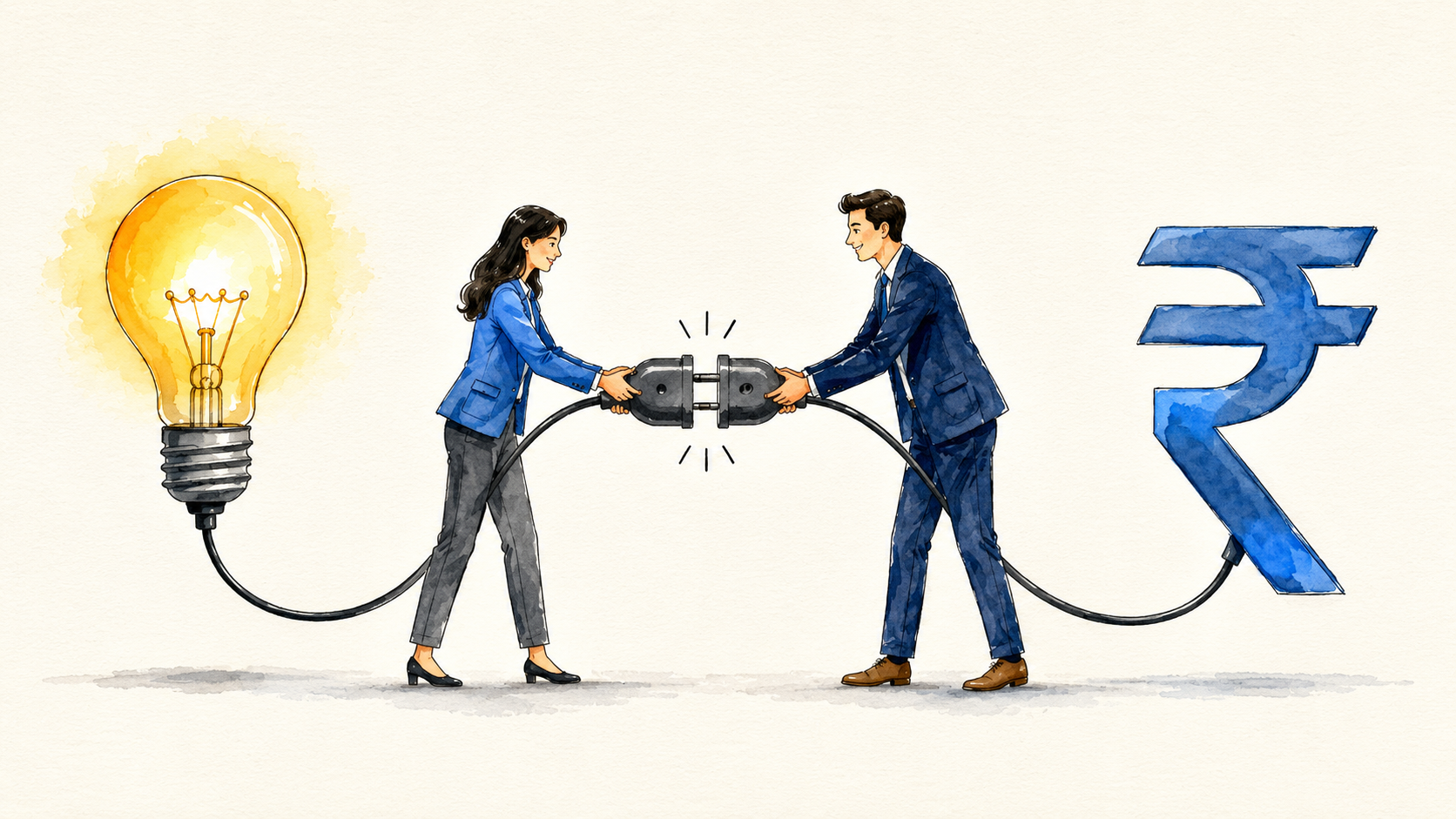
Everyone was waiting for a US recession. It never showed up. Earnings were expected to slow. They didn't. The answer might have been hiding in the GDP equation all along.
The US economy was supposed to be in a recession by now. It isn't. Corporate earnings were supposed to plateau. They haven't. Part of the reason may be sitting in plain sight in the GDP equation.
The "I" - investment - has been doing quiet, heavy lifting. Hyperscaler capex tied to data centers, chips, and AI infrastructure has been large enough to move the needle on headline growth. Add a wealth effect on top: buoyant markets lift household net worth, and that shows up in consumer spending too. Two channels, one narrative - growth that looks broad-based may be more concentrated than it appears.
Here's the part that doesn't get discussed enough: the accounting doesn't move at the same speed as the cash.
How AI spending became a GDP story
Follow the money, and it runs straight through one line in the national accounts:
GDP = Consumption + Investment + Government spending + Net exports
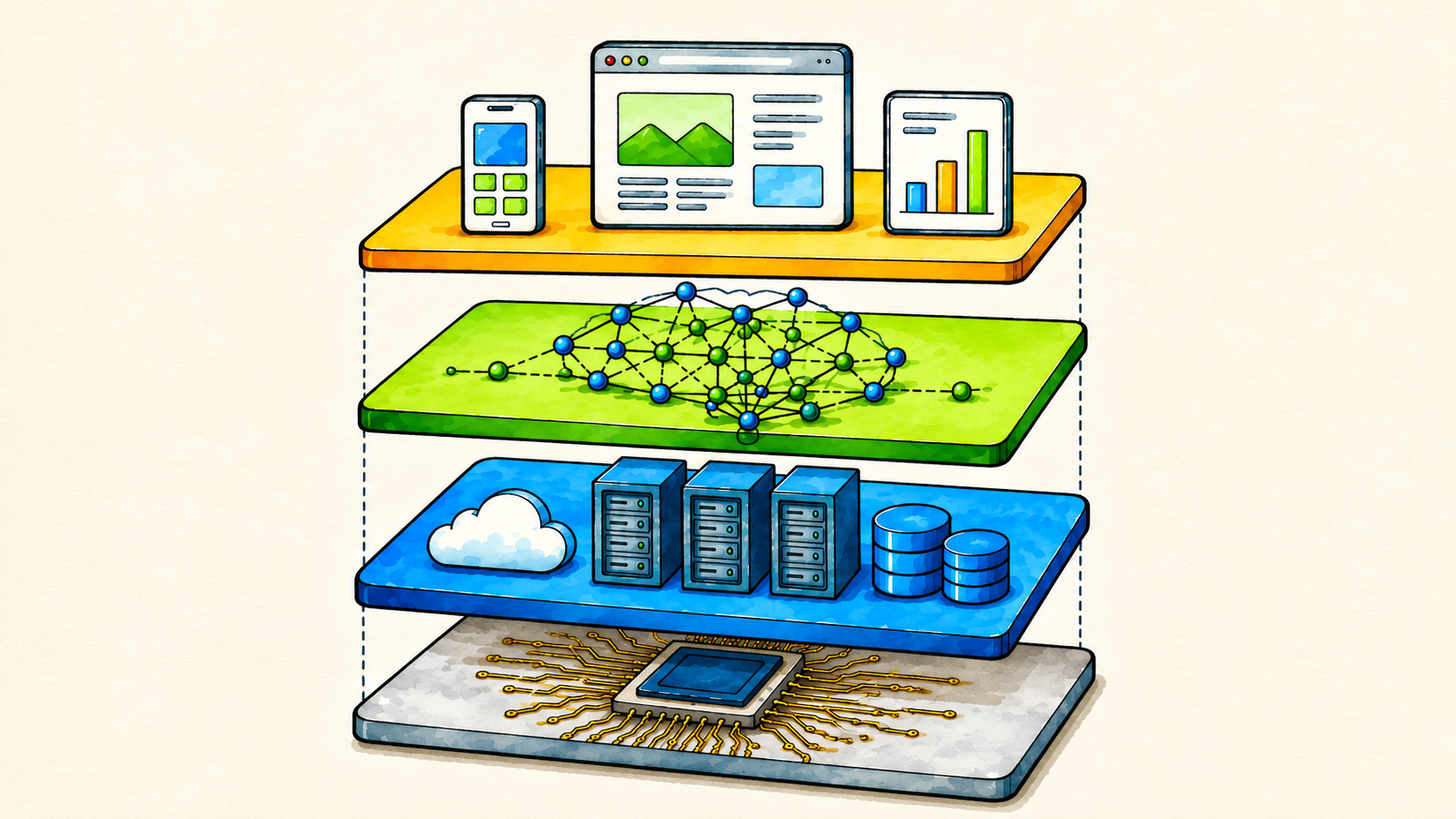
AI infrastructure enters mainly through the "Investment" line - but not uniformly. Data centers, software, R&D, engineering, and power infrastructure all count toward domestic business investment. Imported chips, on the other hand, don't add to GDP directly; imports get subtracted out through net exports. What does show up is everything built around those chips once they land - the construction, the software layer, the energy systems, the engineering hours. The silicon may cross a border, but the buildout around it doesn't.
That distinction matters, because it's exactly where the numbers start to get interesting.
Economists at the Federal Reserve Bank of St. Louis estimated that information-processing equipment, software, R&D, and data-center construction together added 1.16 percentage points to real GDP growth in the second quarter of 2025 - roughly 30% of the quarter's total expansion.
Let that sit for a second: nearly a third of a quarter's growth traced back to categories most closely associated with AI buildout.
The caveat is real, and worth stating plainly: this wasn't a clean read on AI spending alone. Those categories capture non-AI activity too, particularly within research and development, so the true AI-specific contribution is smaller than the headline number suggests. But even discounted for noise, the estimate points to something structural: the investment cycle around AI has grown large enough to move a number as broad and lagging as national GDP. That's not a niche tech story anymore. That's a macro one.
So how much money was actually being spent?
The investment boom was enormous
Start with the scale, because it deserves to be seen plainly: Microsoft, Amazon, Alphabet, and Meta together lifted capital expenditure from roughly $212 billion in 2024 to $354 billion in 2025 - a 67% jump in a single year. Individually: Microsoft at $64.6 billion, Amazon at $128.3 billion, Alphabet at $91.4 billion, Meta at $69.7 billion.
Not every dollar was AI. Cloud infrastructure, fulfillment, search, advertising systems, logistics - all baked into those totals. But the growth engine underneath them was unmistakably servers, networks, data centers, AI capacity. And that spending doesn't stay contained in tech. It ripples outward into construction, power generation, cooling systems, electrical work, engineering services, networking hardware, and semiconductors - an entire industrial supply chain waking up at once.
Which raises the obvious question: if the outlay was this enormous, why didn't earnings take an equally enormous hit?
Why the full cost hasn't shown up yet
When a hyperscaler buys a server or builds a data center, it doesn't expense the full cost on day one. The asset lands on the balance sheet, and the cost gets recognized gradually, as depreciation, over several years.
That creates a gap, and it's not a small one. In 2025, the four hyperscalers spent about $354 billion in capex. Their disclosed depreciation for the same period? Roughly $103 billion. The comparison isn't perfectly clean - different fiscal years, and Amazon's figure folds in finance-lease amortization - but the signal cuts through the noise:
The investment hits GDP now. The cost hits earnings later.
The cash is leaving the building today. The earnings hit is arriving on an installment plan.
Useful lives can lift near-term profits
And the installment plan itself is a lever. Take a $1,200 server: depreciated over six years, that's $200 a year in expense. Over four years, it's $300. Same total cost, but the longer the assumed life, the smaller the near-term bite out of profit.
This isn't hypothetical. Microsoft stretched the useful life of its server and network equipment from four years to six starting in fiscal 2023, a change it estimated would add $3.7 billion to operating income that year alone. Meta extended most server and network assets to 5.5 years in 2025, trimming depreciation by $2.92 billion and lifting net income by $2.59 billion.
To be clear: these are legitimate accounting judgments, not manipulation. Nobody is hiding the total cost. It's disclosed, it's real, and it eventually flows through. What changes is when it shows up. And when the assumption shifts even modestly, the earnings optics shift with it.
NVIDIA got paid on delivery
Now flip to the other side of the same transaction, because timing doesn't just favor the buyer. NVIDIA's Data Center revenue climbed from $10.6 billion in fiscal 2022 to $193.7 billion in the trailing twelve months reported alongside its fiscal 2026 fourth-quarter results - more than eighteen-fold in four years.
NVIDIA still carries its own costs: manufacturing, R&D, compensation. But unlike the buyers, it doesn't spread the recognition of that revenue across six years. It gets recognized largely on delivery, in real time.
The same dollar, counted twice, at two speeds
The same dollar of AI capex is being counted twice, at two different speeds, by two different sets of books, and both look good. The hyperscaler spends it and defers the expense. NVIDIA receives it and books the revenue immediately. GDP captures the investment the moment it happens. Corporate earnings capture the cost years later, on a schedule the buyer itself gets to choose, within reason.
None of this is fraud. None of it is even unusual. It's how accrual accounting and useful-life estimation are supposed to work. But stack it all together, and you get a subtle distortion: an economy and an earnings season that both look stronger than the underlying capital decision has yet been tested to justify. The verdict on whether this spending actually generates a return hasn't been delivered yet. It's sitting in a depreciation schedule, several years out, waiting.
That's the quiet risk underneath the AI boom. It isn't that the spending is fake. It's that the accounting lets growth arrive years before the judgment on whether it was worth it does.
The strength of that mechanism also explains the risk if the cycle turns.
The same force could work in reverse
If AI produces meaningful productivity gains, new products, and stronger revenue, today's investment may prove justified.
But if returns disappoint, hyperscalers could reduce spending. Business investment could weaken, data-center construction could slow, and semiconductor and networking suppliers could face lower revenue growth.
Meanwhile, depreciation from assets already purchased would continue. It could even rise as equipment is completed and placed into service.
Capex can slow quickly, while depreciation from the existing asset base continues.
That is the link back to the recession story. The same force that helped offset higher rates, tighter credit, and weaker investment elsewhere could become a drag if the spending cycle reverses.
AI was not the only reason the United States avoided recession. Consumption, employment, fiscal policy, and other forms of investment all mattered.
But AI may explain part of the economy's resilience.
The key question now is whether AI-generated revenue and productivity will justify the capital already committed. For investors, analysts, and students of finance, that is the relationship to watch: investment today, earnings over time, and economic value still to be proven.
Three decades of educating, mentoring, and inspiring finance professionals. CFA and FRM charter holder with an MS in Finance from ICFAI Hyderabad, recognized for his unique blend of academic depth and practical experience.
View All Articles